Oelo vs. JellyFish Lighting: An Honest Comparison for Omaha Homes (2026)
First, the spelling, because it sends more people here than anything else: if you've been searching oleo vs jellyfish, the brand you want is Oelo — O-E-L-O, out of Fort Collins, Colorado. The vowel order trips up almost everyone, ourselves included the first few times.
Second, the disclosure. We're an installer, and we install Forever Lighting — not Oelo, not JellyFish. Read everything below with that thumb on the scale. We're writing it anyway because homeowners in Elkhorn and Papillion ask us this exact question most weeks, usually at the end of an evening of open tabs, and nearly everything that ranks for it was written by a dealer for one of the two brands. Here's the version written by someone selling neither.
What do Oelo and JellyFish have in common?
Nearly everything a spec sheet can measure. Both mount LED nodes permanently along the fascia inside an aluminum channel. Both run from a phone app with millions of colors, scheduling, and pattern effects. Both are sold and installed through regional dealers rather than off a shelf. Both will photograph beautifully at night in red and green come December.
That last point is the trap. Every permanent lighting brand looks spectacular after dark — that's what the technology does. Night photos cannot separate these systems, which is precisely why the marketing is full of them. We walked the whole category, Trimlight and Gemstone included, in our brand-by-brand comparison, and reached the same conclusion each time: the diodes are not the difference.
So what actually separates Oelo from JellyFish?
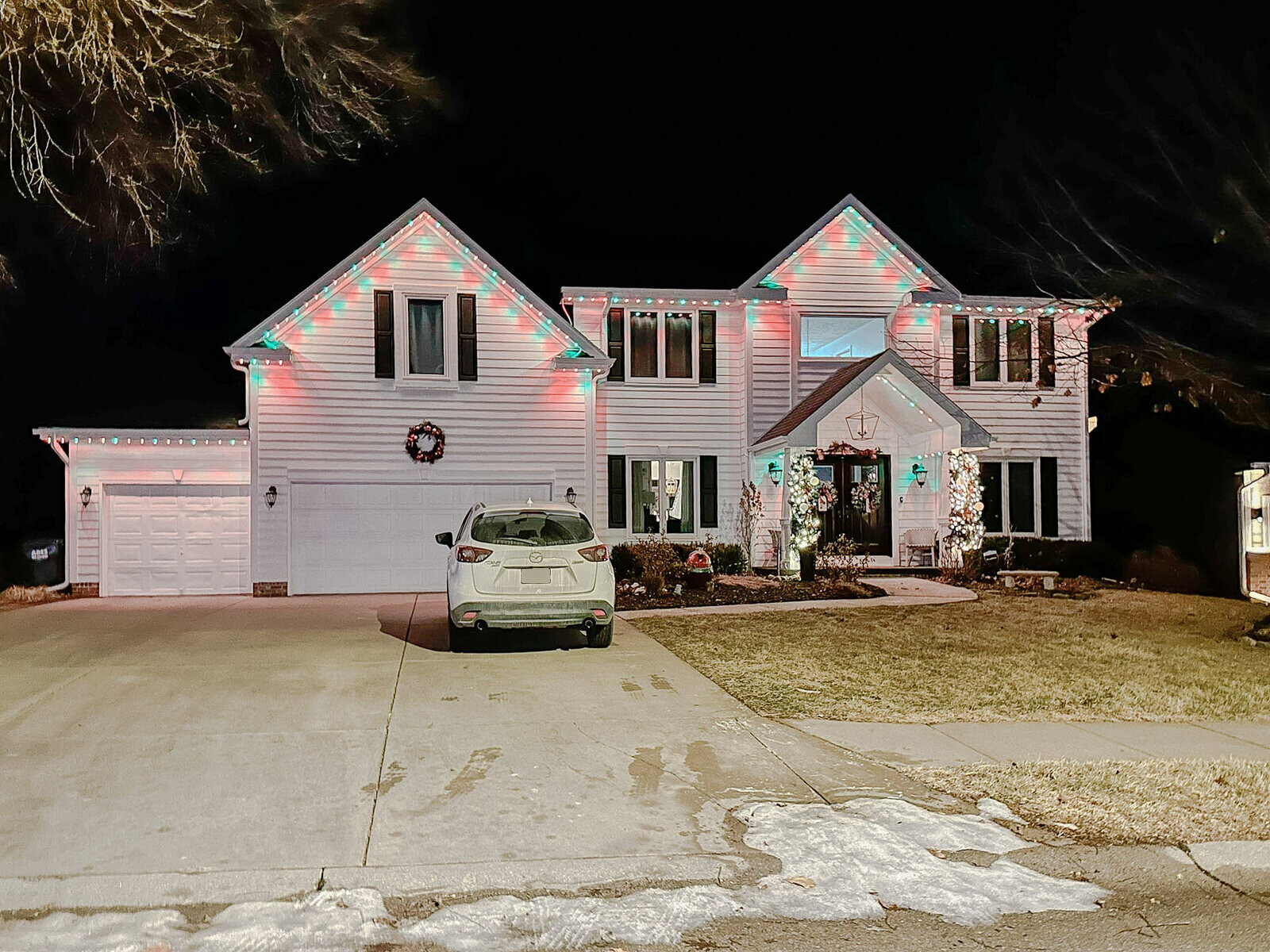
Two different answers to the daytime problem. A permanent system is on your house 365 days a year, and roughly 355 of those it is switched off. What it looks like at noon in July is the thing you will live with. Oelo's pitch has long centered on finishing the channel to match your trim — the track is treated as a visible architectural element that should blend rather than hide. JellyFish takes the other route: make the channel as small and as tucked as possible so there's less of it to notice in the first place.
Neither approach is wrong, and which one wins depends entirely on your fascia. On a dark trim line with deep shadow, a slim tucked channel genuinely disappears. On a wide white fascia in full sun, a well-matched finish tends to read cleaner than a slim channel casting its own shadow line. This is a decision you should make standing in your own driveway at midday — not from a lightbox photo.
Everything else you'll read is thinner than it looks. Diode counts, color claims and app feature lists move around between model years and marketing pages, and much of the published comparison is a dealer grading their own homework. We'd rather tell you which questions survive that noise than repeat numbers we can't stand behind.
What does either one cost in the Omaha metro?
Be skeptical of per-foot pricing you find online — it varies enormously by market, and most of it appears on pages where one brand is being compared favorably to a rival by someone who sells it. What we can say honestly is ours: professionally installed permanent lighting in the Omaha metro generally starts around $5,000, and scales with roofline length and complexity. Corners, peaks, dormers and second stories add labor and material together, which is why two houses on the same street can quote very differently. Forever Lighting through Glow Getter starts at $5,000 with financing available. The full picture of what pushes a quote up or down is in our permanent lighting cost guide, and our pricing page sets permanent alongside seasonal installs if you're still weighing the two.
Whichever brand you're quoting, insist on a measured number for your roofline before you compare anything to anything. A per-foot rate without a design behind it is a guess wearing a decimal point.
Which should an Omaha homeowner choose?
Here's the checklist we'd hand a neighbor, and it holds no matter whose logo ends up on the controller:
- Go see a local install in daylight. At noon, not at night. Daylight is the only condition that tells you whether the channel disappears into the fascia or announces itself from the curb — and it's the entire Oelo-versus-JellyFish argument in one look. Any installer proud of the work will have an address for you.
- Ask who answers the phone in year three. This is a decade-long fixture bolted to your house. A brand headquartered several states away, reached through a dealer who may or may not still hold the territory, is a very different service proposition from a local crew you can call. The brochures never address it.
- Ask for a design of your own home before you sign anything. Which rooflines get lit — and which ones deliberately don't — shapes the result more than any brand decision on this page. You should be approving a picture of your house, not a promise about someone else's.
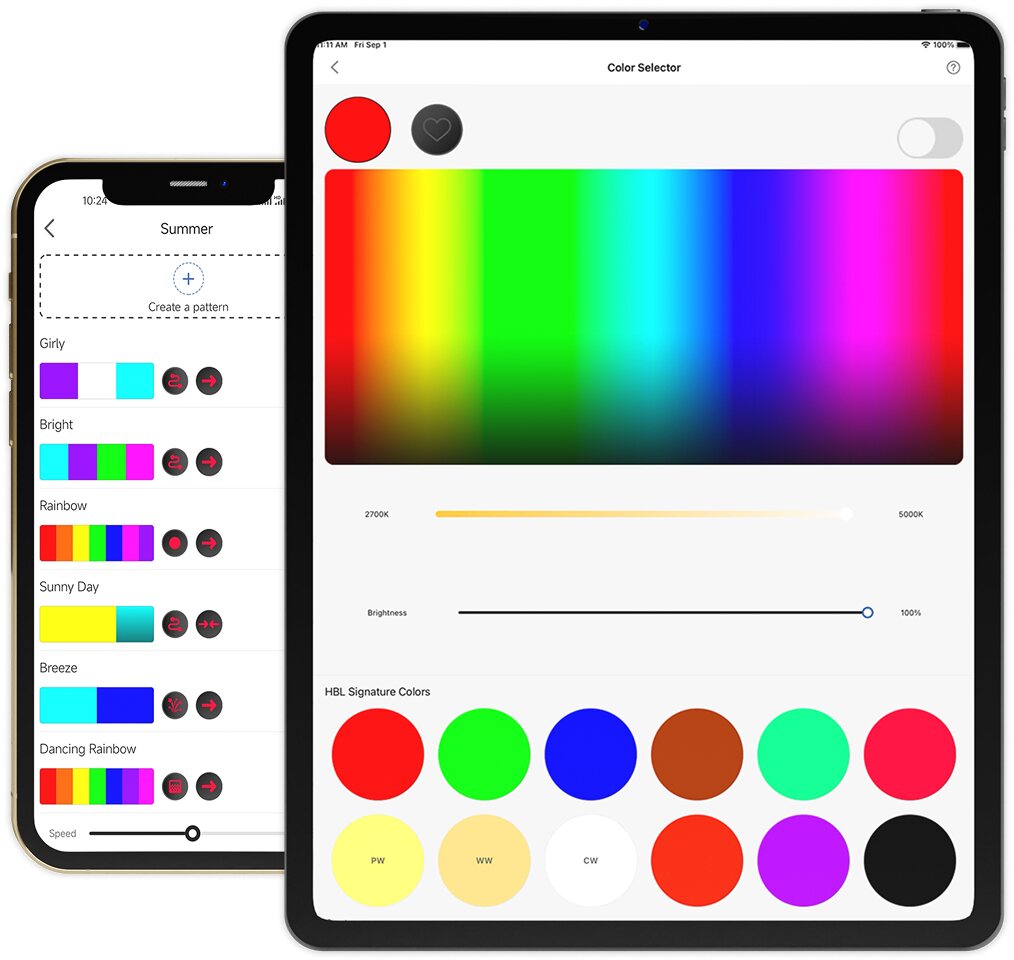
If Oelo or a JellyFish dealer wins on all three for your home, that's a good outcome and we mean it. We simply like where we stand: Forever Lighting is engineered by Holiday Bright Lights, headquartered here in Omaha, with true tunable whites from 2700K candlelight to crisp 5000K, LEDs rated past 50,000 hours, and roughly 80% less energy than a traditional display. It's designed to your house, installed by Luke's insured crew, and backed by a 5.0 on Google. If other names are on your shortlist, we've written those matchups too: EverLights vs. JellyFish, Gemstone Lights vs. JellyFish, and the direct JellyFish vs. Forever Lighting head-to-head.
From Elkhorn to Council Bluffs, any of these systems will make your house glow in December. The difference shows up in March, and in year three, and in who drives out when a section goes dark. Choose for that.
See your roofline in sixteen million colors — before you commit
Request a free custom design rendering of your home with Forever Lighting, plus an exact quote. No pressure, no brand bingo.
Or call/text 531-999-6388
We do the work. You enjoy the wonder.